


Beef tallow works as a dense, occlusive moisturizer that can genuinely help very dry or compromised skin, but it is not a cure for eczema, not a substitute for retinoids or ceramides, and not a fit for everyone. If your skin is chronically parched, cracked at the heels, or struggling after harsh weather, tallow’s fatty-acid profile gives it real emollient value. If you’re prone to breakouts, allergic to animal-derived ingredients, or dealing with broken or inflamed skin, it deserves more caution than the current wave of social media enthusiasm suggests.
Here’s the short version of who tends to do well with it and who should think twice:
- Likely to benefit: people with very dry, flaky, or barrier-compromised skin, especially on hands, elbows, and heels; some people managing eczema find relief, though anyone treating a chronic condition should loop in a clinician first.
- Should be cautious or skip it: oily or acne-prone skin, anyone with a fragrance or animal-product allergy, and anyone with broken, inflamed, or recently treated skin (post-procedure, post-peel, sunburned).
- Before you commit: patch test on the inner forearm for several days, start with a pea-sized amount, and watch for new breakouts or redness before applying it anywhere else.
Key Takeaways
Beef tallow works as a dense occlusive moisturizer for very dry skin, but it requires careful sourcing, a real patch test, and realistic expectations about what it can and can’t treat.
| Point | Details |
|---|---|
| Verdict on tallow | It’s a strong occlusive for very dry or compromised skin, not a treatment for acne, eczema flare-ups, or aging alone. |
| Patch test first | Test on the forearm for 24 to 48 hours before ever applying a new tallow product to your face. |
| Start small | A pea-sized amount covers the whole face; apply it over a humectant like hyaluronic acid for better results. |
| Sourcing matters | Choose 100% grass-fed, grass-finished tallow with disclosed rendering and testing information. |
| Know its limits | Tallow lacks ceramides and won’t replace retinoids or targeted actives for specific skin concerns. |
| Thetallowskinco’s role | Formulates small-batch, grass-fed tallow products like the Primal Tallow Lotion and Farm Silk Cloud Cream to meet transparent sourcing standards. |
Table of Contents
- Is Beef Tallow Good for Skin? What It Actually Is
- How Beef Tallow Works on Skin
- What Does the Evidence Say? A Dermatologist’s View on Beef Tallow
- Risks and Side Effects of Using Tallow on Skin
- How to Use Beef Tallow for Skin Safely
- What to Look for When Buying Tallow Skincare
- DIY Tallow Rendering vs. Buying a Finished Product
- Tallow vs. Ceramides, Humectants, and Retinoids: Which Do You Actually Need?
- Why We Use Grass-Fed Tallow at Thetallowskinco
- Tallow Products Built Around the Sourcing Checklist
- Sources
Is Beef Tallow Good for Skin? What It Actually Is
Tallow is rendered beef fat, purified by slowly melting suet or trim and straining out the connective tissue until what remains is a smooth, shelf-stable solid at room temperature. That rendering step matters more than most product labels let on. Poorly filtered tallow can carry off-notes, impurities, and a shorter usable life, while carefully rendered tallow yields a cleaner, more neutral base that behaves consistently on skin.
What makes tallow interesting from a formulation standpoint is its fatty-acid profile, which overlaps closely with the fats naturally found in human sebum. That overlap is the entire reason it’s used in skincare instead of, say, a random cooking fat.
The major players are:
- Oleic acid, a monounsaturated fat that boosts penetration and gives tallow its soft, workable texture.
- Palmitic acid, a saturated fat that contributes to the structural, protective quality of the skin’s outer layer.
- Stearic acid, another saturated fat that firms up the texture and helps stabilize emulsions.
Tallow also carries trace amounts of fat-soluble vitamins A, D, E, and K, largely inherited from the animal’s diet. This is where marketing tends to get ahead of the science. Cleveland Clinic states plainly that there isn’t strong evidence these trace vitamins are absorbed by skin in amounts that produce a measurable clinical effect. Treat that as background context, not a reason to buy.
Representative fatty-acid composition of beef tallow:
- Oleic acid: roughly 40–50% of total fat content
- Palmitic acid: roughly 25–30%
- Stearic acid: roughly 15–20%
- Remaining: smaller shares of linoleic and other fatty acids, plus trace vitamins
How Beef Tallow Works on Skin
Tallow’s job on your skin is occlusion and emollience, not hydration. That distinction trips up a lot of people, so it’s worth sitting with for a second: hydration means adding water to skin, while moisturization means preventing the water skin already has from evaporating. Tallow does the second job. It does not do the first.
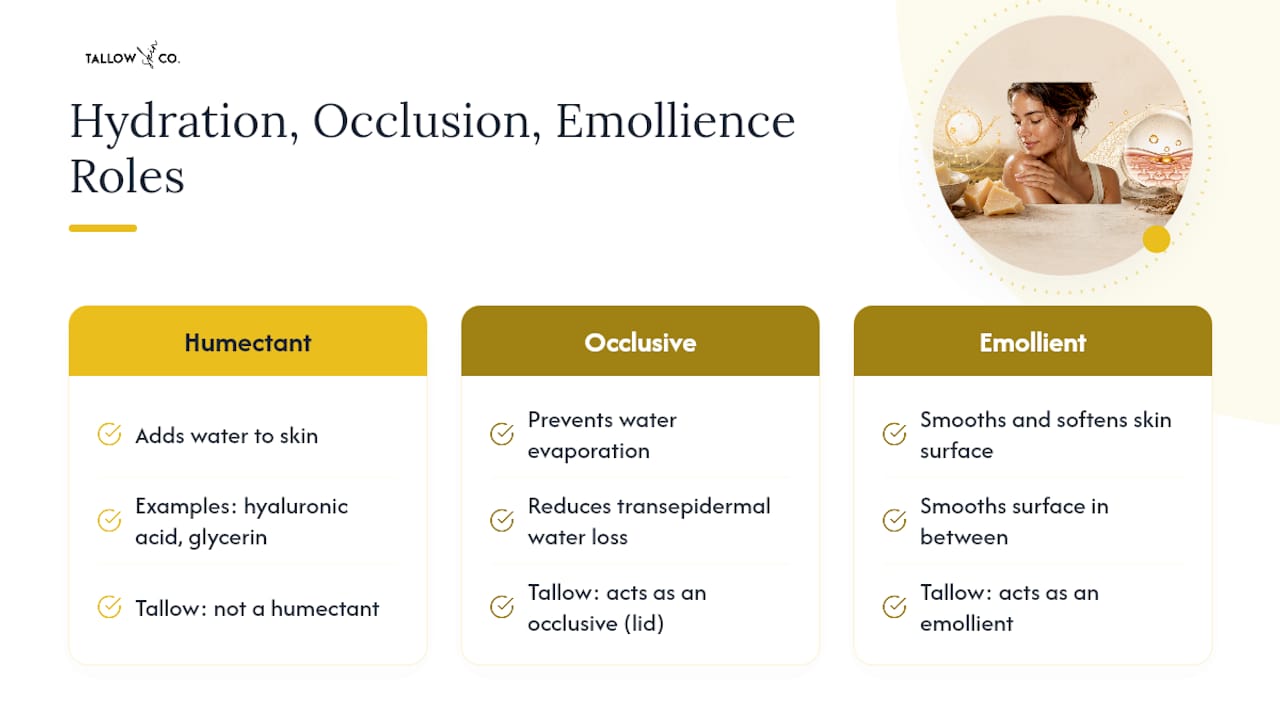
Think of your skin’s surface like a bowl of water sitting in a windy room. A humectant (like hyaluronic acid or glycerin) is what pulls extra moisture into the bowl. An occlusive, like tallow, is the lid that keeps the wind from evaporating what’s already there. Emollients, which tallow also acts as, are what smooth and soften the surface in between. Tallow plays two of those three roles at once: occlusive and emollient, but never humectant.
Mechanistically, research on skin lipids shows that fatty acids similar to tallow’s profile can reinforce the outer skin layer and reduce transepidermal water loss, the process by which water escapes through your skin into the air. That reinforcement is real, but it’s a supporting role, not a standalone treatment.
This is why pairing matters. Apply a humectant like hyaluronic acid to slightly damp skin first, then seal it with a thin layer of tallow. The humectant does the work of drawing moisture in; the tallow does the work of keeping it there.
Pro Tip: Tallow is dense enough that a pea-sized amount covers the whole face. Applying it over damp, humectant-treated skin, rather than as a standalone step, is what separates people who love the results from people who feel greasy and regret buying it.
What Does the Evidence Say? A Dermatologist’s View on Beef Tallow
Some evidence supports tallow’s role as a barrier-supporting occlusive, but the pool of high-quality, long-term human trials is thin, and dermatologists are candid about that gap. A 2024 literature review found that tallow’s fatty-acid composition can mimic human sebum closely enough to function as an effective occlusive, and a small trial involving about 78 participants reported symptomatic relief in skin conditions including atopic dermatitis and psoriasis when using tallow-based emulsions. That’s a promising signal, not a verdict. A study of 78 people is useful groundwork, not proof that tallow works for the broader population of eczema sufferers.
MD Anderson clinicians describe tallow as an “extreme moisturizer” reasonable for genuinely dry skin, while flagging that it lacks ceramides, the lipid molecules found in many barrier-repair creams, and that it can clog pores on acne-prone faces. National Geographic quotes dermatologists making a similar point: tallow contains fatty acids that genuinely resemble those in human skin, but its recent popularity has outrun the clinical evidence supporting it.
That’s the honest read. Tallow has a plausible mechanism and some early, small-scale support. It does not have the decades of large-cohort dermatology research behind it that ceramide creams or prescription retinoids have.
Risks and Side Effects of Using Tallow on Skin
The two biggest practical risks are pore-clogging on oily or acne-prone skin and irritation from poorly sourced or fragranced products. Neither risk is exotic or hard to manage, but both deserve real attention before you slather anything new on your face.
Scripps Health points out that many tallow products on the market haven’t gone through formal safety or stability testing, which raises the odds of inconsistent quality between batches or brands. Watch for these red flags before you buy:
- Added synthetic fragrance, which is one of the most common triggers for contact irritation.
- Vague or missing sourcing information (no mention of grass-fed, grass-finished, or rendering method).
- No batch dates or shelf-life guidance on the label.
- No mention of microbial or stability testing, especially for whipped or water-blended formulas.
- Cloudy, grainy, or off-smelling product, all signs of poor rendering or early rancidity.
Before using any new tallow product on your face, run a simple patch test:
- Apply a small amount (about the size of a grain of rice) to the inside of your forearm.
- Leave it undisturbed for 24 to 48 hours without washing the area.
- Check for redness, itching, swelling, or small bumps at the 24 hour mark and again at 48 hours.
- If skin looks clear, apply a small amount to your jawline for two more days before using it on your full face.
- Discontinue immediately if you notice any burning, hives, or worsening irritation at any stage.
Dermatologists interviewed by Scripps Health caution against applying tallow to broken, freshly treated, or actively inflamed skin unless a provider has specifically advised it, since occlusive layers can trap bacteria or irritants against compromised tissue.
How to Use Beef Tallow for Skin Safely
Start small, patch test first, and apply to clean, slightly damp skin rather than piling it onto dry skin as a first step. A pea-sized amount is genuinely enough for the entire face; body use can run a bit heavier depending on how dry the area is.
Your first week trial:
- Day 1 to 2: Patch test on the inner forearm as described above.
- Day 3 to 4: If clear, apply a rice-grain amount to one small facial area (like the jawline) once daily.
- Day 5 to 7: If no reaction, expand to full face or targeted body areas, once daily, ideally at night.
- Week 2 onward: Adjust frequency based on how your skin responds. Some people do best with nightly use; others find every other night is plenty.
Where it fits in a routine matters. Tallow belongs at the very end, after any humectants, serums, or treatment actives, because as an occlusive it seals in whatever you applied beneath it. Layering it before a serum just blocks that serum from absorbing.
A few example routines:
- Dry winter face routine: cleanse, apply a hyaluronic acid serum to damp skin, follow with a pea-sized amount of tallow moisturizer, focusing on cheeks and any flaky patches.
- Body-only repair routine: apply a slightly heavier layer of tallow balm to elbows, heels, and hands after showering, while skin is still a little damp, to lock in residual water.
- Oily-skin cautious routine: skip the face entirely and limit tallow to isolated dry spots on the body, like cracked heels or rough knees, where clogged pores aren’t a concern.
Storage matters more than people expect from a solid fat. Keep finished tallow products in a cool, dark place, away from direct sun or a steamy bathroom shelf. Signs of rancidity include a sour or “off” smell, a grainy texture that wasn’t there before, or a change in color from creamy white to yellow. Most well-made tallow skincare products, stored properly, hold up for many months, but always check the batch date on the label rather than guessing.
What to Look for When Buying Tallow Skincare
Cattle diet shapes the fatty-acid and trace-vitamin makeup of the fat, and National Geographic’s dermatologist sources specifically flag sourcing transparency as a differentiator between reliable and questionable products.
A practical buying checklist:
- Look for “100% grass-fed and grass-finished” on the label, not just “grass-fed,” since cattle can be grass-fed but grain-finished before slaughter.
- Scan the ingredient list for added fragrance; unscented is safer for reactive or sensitive skin.
- Check for language describing the rendering or clarifying process, which signals a brand that takes purification seriously.
- Confirm there’s a visible batch date and some indication of stability or microbial testing, particularly for water-containing whipped blends.
- Note whether the brand states a preservative strategy for any blend that includes water or botanical extracts, since those combinations are more vulnerable to microbial growth than pure tallow alone.
One detail that rarely makes it into product marketing: tallow rendered from suet or leaf fat (the fat surrounding the kidneys and loins) tends to produce a cleaner, more neutral-smelling, higher-quality result than tallow rendered from trim fat (scraps left over from butchering). Leaf fat is simply purer to start with, so it needs less processing to reach a usable, skin-safe state.
Sourcing transparency, not marketing language, is what separates a trustworthy tallow product from one riding a trend without the quality control to back it up.
DIY Tallow Rendering vs. Buying a Finished Product
DIY rendering can be cheaper and lets you control every ingredient that goes in, but it also carries real contamination and consistency risk if your technique or sanitation isn’t tight. Finished commercial products trade a bit of that hands-on control for tested stability, refined texture, and consistent quality from batch to batch.
If you’re set on rendering your own, the core safety steps look like this:
- Cut suet or trim fat into small, uniform pieces to render evenly.
- Melt slowly over low heat, never letting it scorch or smoke.
- Strain through cheesecloth or a fine mesh at least twice to remove all solids.
- Cool in a sanitized, airtight container, away from any moisture that could introduce bacteria.
- Label with the render date and store in a cool, dark spot.
The risks worth taking seriously:
- Improper straining can leave behind protein particles that spoil faster and irritate skin.
- Inconsistent heat control can scorch fat, changing its smell and shortening its shelf life.
- Home kitchens rarely offer the microbial testing that even small commercial producers should be doing.
- DIY whipped blends that add water or botanical extracts without a real preservative system are especially prone to mold or bacterial growth.
Commercial, finished products make more sense for facial use, for anyone unsure about their DIY sourcing, or for anyone who wants the smoother, more stable texture that whipping and blending techniques provide. That refinement is hard to reliably replicate in a home kitchen without professional equipment and testing.
Tallow vs. Ceramides, Humectants, and Retinoids: Which Do You Actually Need?
Tallow is an occlusive moisturizer. It is not a substitute for a targeted active like a retinoid, and it is not a ceramide-based barrier repair product, even though it’s sometimes marketed as if it could do both jobs at once.
Match the product to the actual problem you’re solving:
- Want to reduce water loss and soften skin? Tallow, or another rich occlusive, is a reasonable fit.
- Want to actively pull water into skin? You need a humectant like hyaluronic acid or glycerin, not an occlusive.
- Want to rebuild a damaged barrier specifically? Ceramide-based creams are formulated for that job and have a larger clinical evidence base behind them than tallow does.
- Want to treat acne, fine lines, or pigmentation? That calls for a targeted active like a retinoid, and tallow won’t move that needle regardless of how it’s marketed.
A quick side-by-side of what each category does best:
- Tallow: heavy occlusion, emollience, sebum-like texture; limited by lack of ceramides and comedogenic potential for acne-prone skin.
- Ceramides: direct barrier-lipid replacement, strong evidence base; limited by not addressing dehydration on their own.
- Humectants (hyaluronic acid, glycerin): draw water into skin; limited without an occlusive layer to seal that water in.
- Retinoids: address cell turnover, fine lines, acne; limited by irritation potential and no moisturizing function at all.
If you’re dealing with a diagnosed skin condition, persistent breakouts, or anything that isn’t responding to basic moisturizing, that’s a conversation for a dermatologist, not a swap between moisturizer types.
Why We Use Grass-Fed Tallow at Thetallowskinco
The goal was never to chase a trend. It was to take an ingredient with a genuinely useful fatty-acid profile and formulate it the way modern cosmetic science says it should be formulated, not the way a kitchen counter DIY recipe demands.
That means whipping tallow to improve spreadability, blending it with non-comedogenic carrier oils to reduce the risk of clogged pores, and keeping fragrance out of formulations meant for reactive or sensitive skin. Small-batch production isn’t a marketing line here; it’s what makes it possible to control quality at every step, from sourcing to the finished jar. You can read more about how that sourcing and formulation philosophy comes together in Thetallowskinco’s grass-fed tallow overview.
Tallow Products Built Around the Sourcing Checklist
Every product Thetallowskinco makes is measured against the same checklist covered above: transparent grass-fed and grass-finished sourcing, no unnecessary fragrance where sensitive skin is the priority, and small-batch formulation that keeps quality consistent jar to jar.
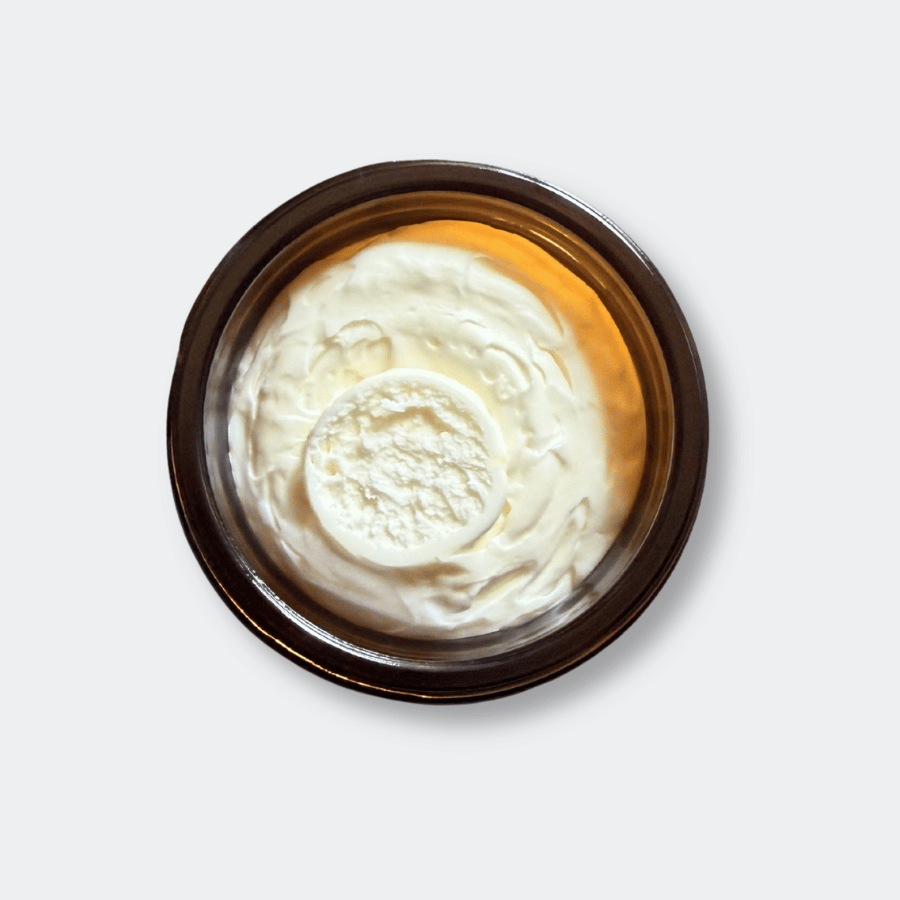
For dry patches, cracked elbows, and general body repair, the Primal Tallow Lotion with Emu Oil & Raw Honey combines tallow’s occlusive strength with emu oil and raw honey, making it a solid pick for rougher, more stubborn dry areas rather than daily facial use. For anyone who wants a fragrance-free option suited to sensitive or reactive facial skin, the Farm Silk Unscented Tallow Cloud Cream skips added scent entirely, which matters if you’re prone to contact irritation.
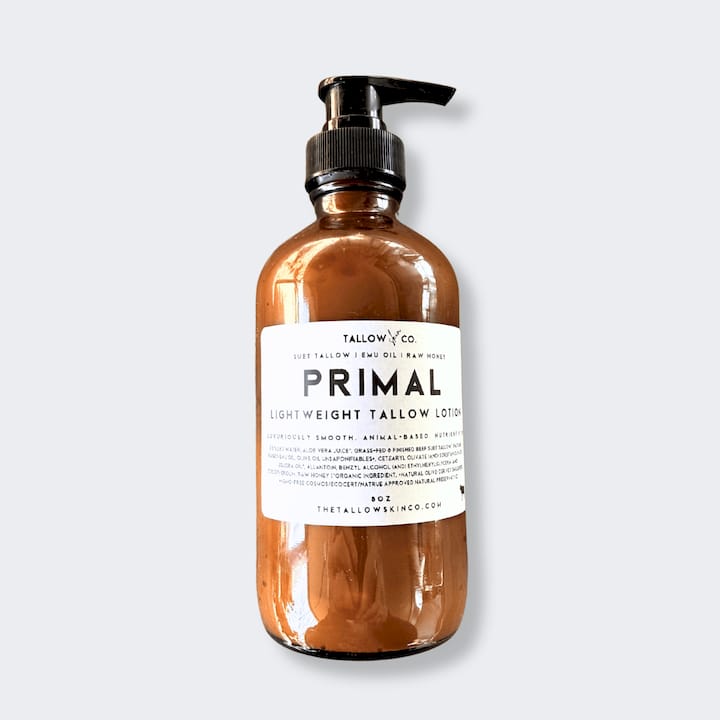
If dry patches on hands, elbows, or heels are your main concern, start with the Primal Tallow Lotion at night after a shower. If your face needs a gentle, unscented option that follows the patch test protocol above, the Farm Silk cream is the more cautious starting point. Either page will walk you through full ingredient details before you buy.
Sources
- PMC article: beef tallow literature review (PMC11193910)
- Is Beef Tallow Good for Your Skin? — Cleveland Clinic
- Beef tallow as skin care? Experts explain what’s truth—and myth | National Geographic
- Beef tallow: dietitian and derm weigh in | UT MD Anderson
- Beef Tallow in Skin Care: Safety, Benefits and Risks — Scripps Health
These sources come from respected medical and journalism outlets and are worth a closer read if you want the full clinical detail behind any claim in this guide.