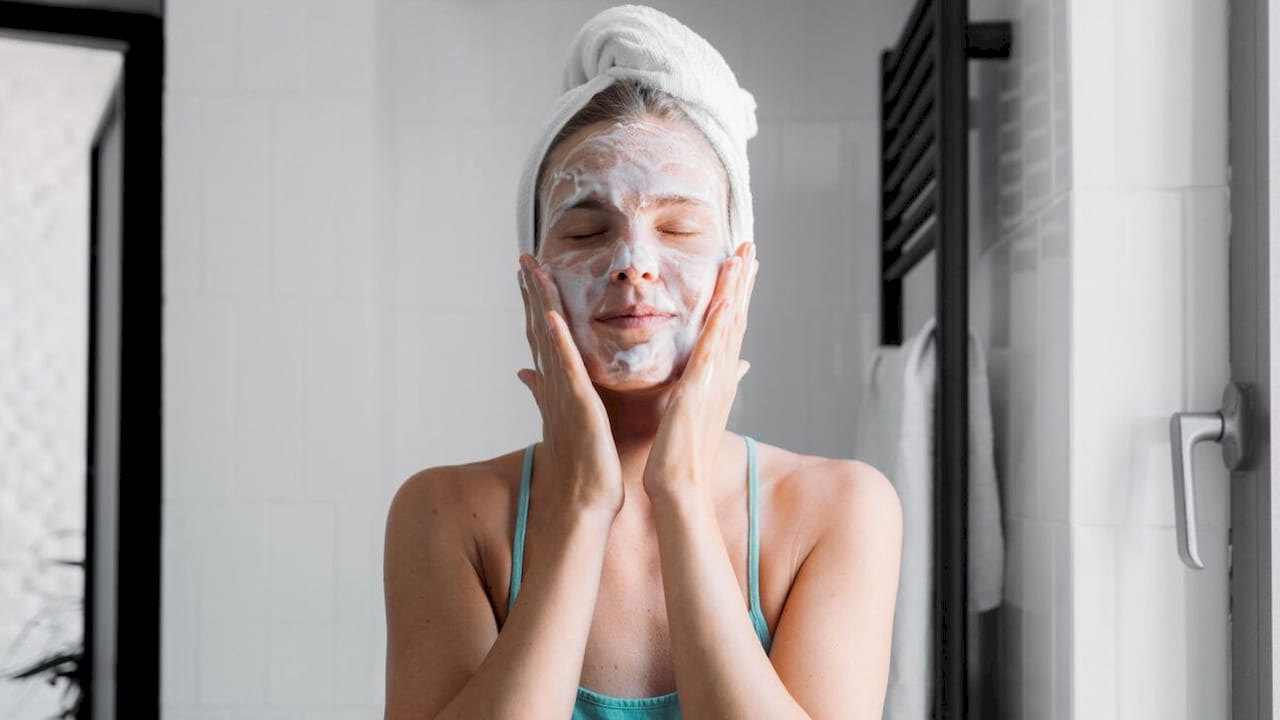
Double Cleansing: How to Do It Without Over-Cleansing Your Skin
Double cleansing is exactly what it sounds like: cleansing your face twice, using two different types of cleansers for two different jobs.
The first cleanse uses an oil-based cleanser, cleansing balm, or micellar water to break down sunscreen, makeup, excess sebum, and other oil-soluble buildup. The second uses a water-based cleanser to wash away sweat, dirt, and any residue left behind.
Done well, double cleansing can leave skin thoroughly clean without needing aggressive scrubbing or a harsh cleanser. But that doesn’t mean everyone needs to do it every night—or that more cleansing is always better.
When double cleansing can be especially helpful:
- You wear sunscreen daily, particularly mineral or water-resistant formulas
- You wear makeup, especially waterproof or long-wear products
- Your skin is prone to congestion or noticeable buildup
- You’ve been sweating heavily or exposed to significant dirt, pollution, or grime
- A single cleanse doesn’t seem to fully remove everything from your skin
What about dry or sensitive skin?
Dry, reactive, and sensitive skin can still be double cleansed. The key is choosing gentle cleansers and paying attention to your skin barrier. An oil-based first cleanse can be an especially effective way to loosen makeup and sunscreen without relying on aggressive rubbing.
If your skin is currently stinging, flaking, unusually tight, or otherwise showing signs of a compromised barrier, simplify your routine and stick with a gentle cleanse until your skin feels comfortable again.
And if you haven’t worn makeup or sunscreen and there isn’t much to remove? You probably don’t need two cleanses just for the sake of double cleansing. A single, gentle cleanse may be all your skin needs that evening.
Table of Contents
- What Is Double Cleansing and How Does It Work?
- What Can Double Cleansing Do for Your Skin?
- Who Should Double Cleanse?
- How to Double Cleanse Step by Step
- How to Choose the Right Cleansers for Your Skin Type
- Common Double Cleansing Mistakes to Avoid
- A Gentle Double Cleansing Routine from Tallow Skin Co.
- Key Takeaways
What Is Double Cleansing and How Does It Work?
The idea behind double cleansing is simple: use two types of cleansers to remove different kinds of buildup from your skin.
The first cleanse targets oil-soluble products and debris, including sunscreen, makeup, and excess sebum. An oil cleanser or cleansing balm helps loosen and lift these substances so they can be rinsed away without aggressive scrubbing. The second cleanse removes remaining residue, sweat, dirt, and other water-soluble buildup, leaving the skin ready for the rest of your routine.
Here’s how it works:
- Step 1 — Oil-based cleanse: Apply an oil cleanser or cleansing balm to dry skin and gently massage it over the face. This helps break down sunscreen, makeup, excess sebum, and other oil-soluble buildup. Many oil cleansers contain emulsifiers that allow the oil and everything it has loosened to rinse away more easily with water.
- Step 2 — Water-based cleanse: After rinsing the first cleanser, follow with a gentle gel, cream, or foaming cleanser on damp skin. This removes remaining residue, sweat, dirt, and impurities from the skin.
- Why the order matters: Starting with the oil-based cleanser allows it to work directly on makeup, sunscreen, and sebum before the water-based cleanser finishes the job. Using the two in this order gives you a more thorough cleanse without relying on one overly aggressive cleanser.
Double cleansing is closely associated with Korean skincare routines, where thorough but gentle cleansing is considered an important first step before applying hydrating and treatment products. Today, the method has become especially popular for removing modern sunscreens, long-wear makeup, and other products that may not come off completely with a single gentle cleanse.
What Can Double Cleansing Do for Your Skin?
Double cleansing can be useful, but its main job is still pretty simple: remove what’s sitting on your skin thoroughly without having to scrub or rely on an overly harsh cleanser.
What you can realistically expect:
- More thorough removal of sunscreen, makeup, excess sebum, and daily buildup
- Less residue left behind after cleansing
- A clean surface for the serums, moisturizers, and other products that follow
- Less need for aggressive rubbing when removing stubborn makeup or sunscreen
- A cleansing routine that can still feel gentle when the right products are used
For people who regularly wear sunscreen, makeup, or multiple skincare products, the biggest difference may simply be that skin feels clean without feeling stripped afterward.
What double cleansing won’t do:
- Cure acne on its own
- “Detox” your skin or pull toxins from your pores
- Permanently shrink or erase pores
- Replace targeted treatments for acne, rosacea, eczema, or other skin conditions
- Automatically improve your skin simply because you’re cleansing twice
More cleansing isn’t always better. Cleansing too frequently, using harsh surfactants, scrubbing aggressively, or combining too many exfoliating products can disrupt the skin barrier and leave skin feeling tight, dry, irritated, or more reactive.
The goal of double cleansing isn’t to make your skin feel squeaky clean. It’s to remove what needs to come off while leaving your skin barrier as comfortable and supported as possible.
Who Should Double Cleanse?
Double cleansing can work for almost any skin type. Whether you need it has more to do with what’s on your skin at the end of the day—and how your skin responds to cleansing—than whether you’re dry, oily, or somewhere in between.
You may benefit most from double cleansing if you:
- Wear sunscreen daily, especially mineral or water-resistant formulas
- Wear waterproof mascara, long-wear foundation, or other hard-to-remove makeup
- Have oily or congestion-prone skin and notice buildup by the end of the day
- Use multiple skincare or cosmetic products throughout the day
- Have been sweating heavily or exposed to significant dirt, pollution, or grime
- Find that one gentle cleanse regularly leaves product or residue behind
Double cleansing for dry, sensitive, or reactive skin
Dry and sensitive skin doesn’t automatically need to avoid double cleansing. The goal is to remove sunscreen, makeup, and buildup without removing more of your skin’s natural oils than necessary.
A gentle oil cleanser can actually make the first step easier because it loosens stubborn products without requiring aggressive rubbing. Follow it with a mild water-based cleanser rather than a harsh or highly stripping formula.
If your skin tends to be dry or reactive:
- Use lukewarm rather than hot water
- Massage gently instead of scrubbing
- Choose cleansers formulated without harsh or unnecessarily aggressive cleansing agents
- Keep each cleansing step brief
- Pat your face dry rather than rubbing it with a towel
- Follow cleansing with water-based hydration and moisturizer while your skin is still slightly damp
- Pay attention to how your skin feels—not just how “clean” it feels
Your skin should feel comfortable after cleansing. Persistent tightness, burning, stinging, increased redness, flaking, or sudden sensitivity can be signs that your routine is too aggressive.
When to scale back
Even if you normally double cleanse, there are times when one gentle cleanse may be the better choice. If your skin barrier is irritated or compromised, simplify your routine until your skin feels comfortable again.
You may also need to adjust your cleansing routine while using prescription treatments that increase sensitivity or after procedures such as chemical peels. Follow your dermatologist or skincare professional’s aftercare instructions in those situations.
And if you didn’t wear sunscreen or makeup and have very little to remove that day, you may simply not need two cleansing steps.
What about oily or congestion-prone skin?
Oily skin can benefit from double cleansing too, particularly when sunscreen, makeup, and excess sebum accumulate throughout the day. But oily skin doesn’t need to be scrubbed or stripped to feel clean.
Using overly harsh cleansers can leave skin irritated and uncomfortable. A thorough but gentle double cleanse is usually a better goal than trying to remove every trace of natural oil from the skin.
Morning vs. evening
Double cleansing generally makes the most sense at night, when you’re removing sunscreen, makeup, sebum, sweat, and buildup from the day.
In the morning, most people don’t have those same layers to remove. A single gentle cleanse may be enough, and some people with particularly dry or sensitive skin may prefer simply rinsing with lukewarm water.
The goal isn’t to cleanse as much as possible. It’s to remove what needs to come off without unnecessarily disrupting what your skin needs to stay comfortable and balanced.

How to Double Cleanse Step by Step
Double cleansing doesn’t need to be complicated. Gentle technique and choosing the right products matter more than using a lot of cleanser or spending several minutes massaging your skin.
- Start with dry skin. Apply your oil cleanser or cleansing balm to a dry face, unless the product directions specify otherwise. Starting dry allows the cleanser to make direct contact with sunscreen, makeup, sebum, and other oil-soluble buildup.
- Massage gently. Using your fingertips, work the cleanser across your forehead, nose, cheeks, chin, and around areas where makeup or sunscreen tends to linger. Use light pressure—there’s no need to scrub or massage until your skin turns red.
- Emulsify with lukewarm water. If you’re using an emulsifying cleansing oil or balm, wet your fingertips and continue gently massaging. The cleanser should begin turning milky as it mixes with water, helping the oil and loosened buildup rinse away.
- Rinse thoroughly. Use lukewarm water rather than very hot water, which can be drying and irritating to the skin.
- Follow with your water-based cleanser. While your skin is damp, apply a gentle gel, cream, or foaming cleanser. Massage it over your skin according to the product directions, paying attention to areas where residue tends to remain.
- Rinse again and pat dry. Rinse thoroughly with lukewarm water, then gently pat your face with a clean towel rather than rubbing.
- Continue with the rest of your skincare routine. After cleansing, apply any water-based hydration, serums, or treatments you use, followed by moisturizer. If you use an anhydrous tallow balm or other occlusive product, apply it toward the end of your routine to help seal in moisture.
Product Types for Each Step
First cleanse:
- Cleansing oils
- Cleansing balms
- Micellar water
Second cleanse:
- Gel cleansers
- Cream or milky cleansers
- Gentle foaming cleansers
- Facial soap bars
Pro Tip: Choose an emulsifying oil cleanser or cleansing balm for your first cleanse. Emulsifiers allow the oil to mix with water when you rinse, helping remove the cleanser along with the sunscreen, makeup, and sebum it has loosened. This can leave less oily residue behind for your second cleanser to remove.
Do: Use gentle pressure, lukewarm water, and follow cleansing with hydration and moisturizer.
Don’t: Use very hot water, scrub aggressively, or pair two harsh or stripping cleansers just because you’re cleansing twice.
How to Choose the Right Cleansers for Your Skin Type
The best double-cleansing routine isn’t necessarily the one with the most products—it’s the one that removes what needs to come off without leaving your skin tight, stripped, or irritated.
Choosing Your First Cleanser
For your first cleanse, look for a product designed to break down sunscreen, makeup, excess sebum, and other oil-soluble buildup.
Cleansing balms have a rich texture and can be especially comfortable for dry or sensitive skin, while still being effective at removing makeup and sunscreen.
Emulsifying cleansing oils combine the makeup-dissolving benefits of oil with emulsifiers that help the cleanser rinse away with water instead of leaving a heavy oily film behind.
Micellar watercan be a convenient option for light makeup or sunscreen and for people who prefer not to use an oil or balm. Avoid excessive rubbing with cotton pads, particularly if your skin is sensitive or reactive.
Choosing Your Second Cleanser
Your second cleanser should finish the job without making your skin feel squeaky clean.
Creamy or milky cleansers are often a good fit for dry, sensitive, or reactive skin. Gentle gels and foaming cleansers can work well for normal, combination, or oily skin—but a foaming texture doesn’t automatically mean a cleanser is harsh.
Rather than avoiding entire categories of cleansing ingredients, look at the finished formula and how your skin responds to it. If your skin is sensitive, fragrance-free formulas and cleansers without unnecessary exfoliating actives may be a better place to start.
Oily or acne-prone skin may benefit from a cleanser containing an ingredient such as salicylic acid, but you don’t necessarily need an active cleanser every time you wash your face. Consider the rest of your routine, especially if you already use exfoliating acids, retinoids, or other potentially irritating treatments.
Double Cleansing by Skin Type
| Skin Type | First Cleanse | Second Cleanse |
|---|---|---|
| Dry | Emulsifying cleansing oil or rich cleansing balm | Gentle cream or milky cleanser |
| Sensitive / Reactive | Gentle cleansing oil, balm, or micellar water | Mild cream, milk, or gentle foaming cleanser |
| Oily / Acne-Prone | Lightweight emulsifying oil or balm | Gentle gel or foaming cleanser; salicylic acid may be useful for some |
| Combination | Cleansing oil or balm | Gentle gel, cream, or foaming cleanser based on how your skin feels |
| Normal | Cleansing oil or balm | Gentle gel, cream, milk, or foaming cleanser |
Your skin type is a starting point, not a rulebook. The best test is how your skin feels after cleansing: clean and comfortable, without persistent tightness, burning, stinging, or irritation.
A Gentle Double Cleansing Routine from Tallow Skin Co.
Building your double cleanse starts with two products: an oil-based first cleanse to break down sunscreen, makeup, and excess sebum, followed by a water-based cleanser chosen for your skin and what it needs that day.
Step 1: Start with an oil-based cleanser
Massage an emulsifying cleansing oil or balm onto dry skin to loosen sunscreen, makeup, and oil-soluble buildup. Add a little lukewarm water to emulsify, then rinse thoroughly.
Step 2: Choose your second cleanse
This is where you can personalize the routine. Tallow Skin Co. offers several cleansers with different textures and formulas, so your second step doesn’t have to look the same for every skin type.
- Cloudwash Milky Cleanser: A creamy option for dry, sensitive, or reactive skin and anyone who prefers a softer, non-foaming cleanse.
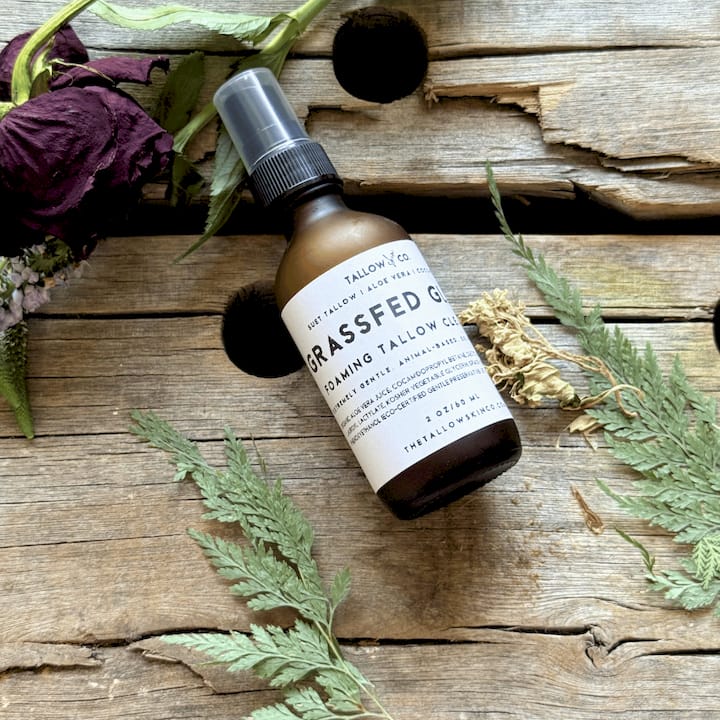
- Grass-Fed Glow Foaming Tallow Cleanser: A gentle foaming option for thoroughly removing remaining residue without aiming for that stripped, squeaky-clean feeling.
- Blue Tansy Gel Cleanser: A lightweight gel option for anyone who prefers a fresh, clean-rinsing second cleanse.
- Golden Aura Turmeric Cleanser: A good choice when you want a more treatment-focused cleanser as part of your routine.
- Charcoal & Manuka Tallow Soap: A traditional bar option that’s especially popular with customers who prefer a deeper-cleansing feel.
You don’t need to use the same second cleanser every night. Skin can change with the weather, your routine, how much product you’ve worn, and how it feels that day.
The goal is to pair an effective first cleanse with a second cleanser that leaves your skin feeling clean and comfortable—not tight, stripped, or irritated.
Common Double Cleansing Mistakes to Avoid
Most problems with double cleansing come from doing too much—not from the basic idea of cleansing twice. The goal is to remove buildup thoroughly while keeping your skin comfortable.
Common mistakes include:
- Using water that’s too hot. Very hot water can leave skin feeling dry, tight, and irritated. Stick with lukewarm water for both cleansing steps.
- Scrubbing instead of gently massaging. Your cleansers should do most of the work. Aggressive rubbing, washcloths, cleansing brushes, or repeatedly wiping the skin can create unnecessary irritation.
- Pairing two overly aggressive cleansers. Double cleansing doesn’t mean you need two “deep cleaning” formulas. If your first cleanser effectively removes makeup and sunscreen, your second cleanser can be simple and gentle.
- Overdoing exfoliating ingredients. An exfoliating cleanser may work well for some skin types, but consider what else is in your routine. Layering exfoliating cleansers with acids, scrubs, retinoids, or other active treatments can be too much for some skin.
- Double cleansing when there’s very little to remove. If you haven’t worn sunscreen, makeup, or other products and your skin doesn’t feel particularly dirty, a single gentle cleanse may be enough.
- Ignoring what your skin is telling you. Cleansing shouldn’t consistently leave your face feeling tight, uncomfortable, or irritated.
Signs You May Be Over-Cleansing
Pay attention if you start noticing increased dryness or flaking, persistent tightness after washing, burning or stinging, redness, or products suddenly irritating skin that previously tolerated them well.
Those can be signs that your cleansing routine is too aggressive or that your skin barrier is irritated.
If that happens, scale back. Switch temporarily to one gentle cleanser, avoid unnecessary exfoliation, and keep the rest of your routine simple and moisturizing while your skin recovers.
Once your skin feels comfortable again, you can reintroduce double cleansing when you actually need the extra cleansing step.
The best double cleanse shouldn’t leave your skin feeling squeaky clean. It should simply feel clean, soft, and comfortable.
How Often Should You Double Cleanse?
There’s no set schedule for double cleansing. A good rule is to use it when you actually have something that warrants two cleansing steps.
If you wear sunscreen or makeup daily, double cleansing each evening can make sense. If you only wear them occasionally, you may only need to double cleanse a few times a week. Dry or sensitive skin doesn’t automatically need to double cleanse less often—the right frequency depends on your products and how your skin responds.
In the morning, one gentle cleanse is usually enough. Some people with dry or sensitive skin may prefer simply rinsing with lukewarm water, while those who wake up oily or use heavier overnight products may prefer a gentle cleanser.
If double cleansing starts leaving your skin tight, dry, irritated, or uncomfortable, scale back or switch to gentler products.
And if one cleanse already removes everything effectively? There’s no reason to add a second step just because double cleansing is popular.
Key Takeaways
Double cleansing can be a useful addition to your skincare routine, but it doesn’t need to be complicated—and it isn’t something everyone needs to do every night.
- Oil first, water second. Start with an oil-based cleanser or balm to loosen sunscreen, makeup, excess sebum, and oil-soluble buildup. Follow with a gentle water-based cleanser to remove what remains.
- Double cleanse when there’s something to remove. It’s especially useful in the evening after wearing sunscreen, makeup, or long-wear products. On lighter days, one gentle cleanse may be enough.
- Dry and sensitive skin can double cleanse, too. Choosing gentle products and paying attention to how your skin feels matters more than following rigid rules based on skin type.
- Gentle is the goal. Use lukewarm water, avoid aggressive scrubbing, and don’t assume that skin needs to feel squeaky clean to actually be clean.
- Choose your second cleanser based on your skin. Creamy and milky cleansers can be especially comfortable for dry or reactive skin, while gels and gentle foaming formulas may work well for combination, oily, or normal skin.
- Cleansing is only the beginning of your routine. Follow with water-based hydration, serums or treatments as needed, and moisturizer. An anhydrous tallow balm can be used toward the end of your routine to help soften skin and reduce moisture loss.
The best cleansing routine isn’t necessarily the one with the most steps. It’s the one that removes what your skin needs removed while leaving it feeling clean, soft, and comfortable.